

Material:Polyethylene (PE), compliant with USP Class VI standards

- Products
- Solutions
-
SolutionsExplore All Solutions
-
- Support
-
SupportExplore All Support
-
- About us
-
About usExplore All About us
-
- Contact
English

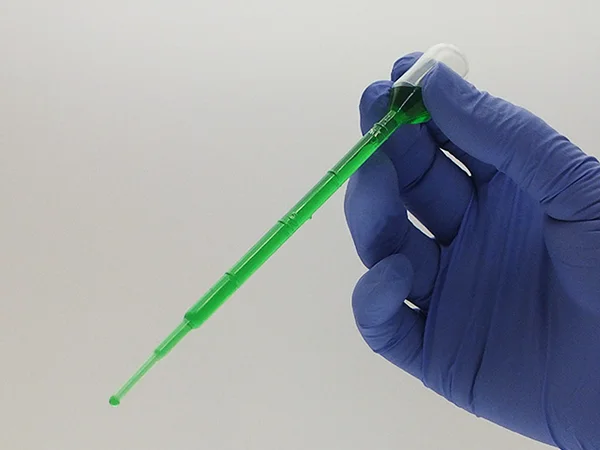
Pasteur pipette is a laboratory consumable designed for the aspiration, transfer, and dispensing of small liquid volumes, commonly used in cell culture, microbiology, clinical diagnostics, sample processing, and routine liquid transfer operations. The product is typically a plastic Pasteur pipette made from PE material, featuring softness, light weight, and breakage resistance, suitable for single use to minimize cleaning requirements and reduce the risk of cross-contamination.
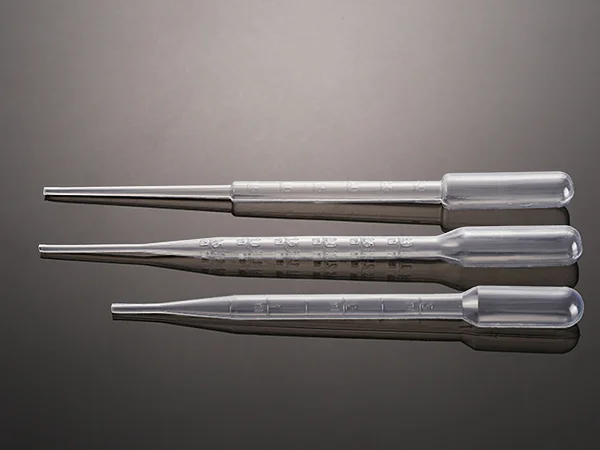
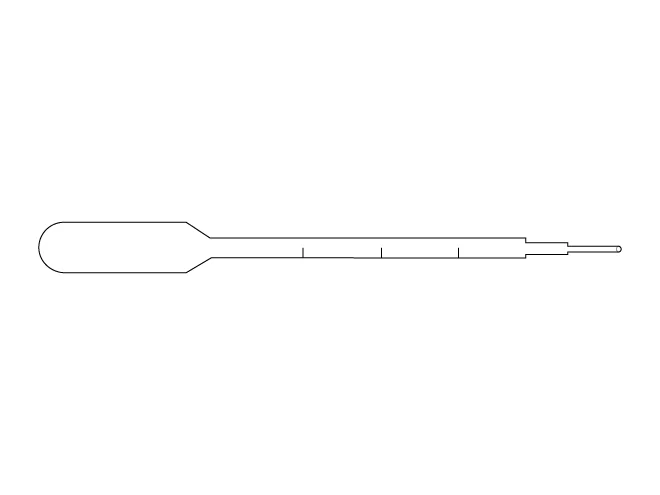
The Pasteur pipette mainly consists of the pipette body, pipette tip, bulb, and graduated area.
Material:Polyethylene (PE), compliant with USP Class VI standards
Packaging:Boxed, Bagged
Specifications:0.2 mL, 1.0 mL, 3.0 mL, 5.0 mL
| NO. | Capacity (mL) | Length (mm) | Packaging | Sterilization | Pieces/Bag | Pieces/Box |
|---|---|---|---|---|---|---|
| PP0201 | 0.2 | 68 | Single Piece | Yes | 1 | 5000 |
| PP1001 | 1.0 | 150 | Single Piece | Yes | 1 | 4000 |
| PP3001 | 3.0 | 155 | Single Piece | Yes | 1 | 4000 |
| PP3002 | 3.0 Extended | 180 | Single Piece | Yes | 1 | 4000 |
| PP3003 | 3.0 Extended | 180 | Single Piece | Yes | 1 | 4000 |
| PP5001 | 5.0 | 250 | Single Piece | Yes | 1 | 1600 |
| NO. | Capacity (mL) | Length (mm) | Packaging | Sterilization | Pieces/Bag | Pieces/Box |
|---|---|---|---|---|---|---|
| PP0202 | 0.2 | 68 | Multiple pieces | No | 100 | 10000 |
| PP1002 | 1.0 | 150 | Multiple pieces | No | 100 | 5000 |
| PP1003 | 1.0 | 150 | Multiple pieces | Yes | 20 | 4000 |
| PP3004 | 3.0 | 155 | Multiple pieces | No | 100 | 5000 |
| PP3005 | 3.0 Extended | 180 | Multiple pieces | No | 100 | 5000 |
| PP0203 | 0.2 | 68 | Multiple pieces | Yes | 100 | 10000 |
| PP1004 | 1.0 | 150 | Multiple pieces | Yes | 100 | 5000 |
| PP3006 | 3.0 | 155 | Multiple pieces | Yes | 100 | 5000 |
| PP3007 | 3.0 Extended | 180 | Multiple pieces | Yes | 100 | 5000 |
| NO. | Capacity (mL) | Length (mm) | Packaging | Sterilization | pieces/box | Pieces/Box |
|---|---|---|---|---|---|---|
| PP1005 | 1.0 | 150 | Single piece (plastic-plastic) | Yes | 1 | 2000 |
| PP1006 | 1.0 | 150 | Single piece (paper-plastic) | Yes | 1 | 2000 |
| PP1007 | 1.0 | 150 | Multiple pieces | No | 200 | 2000 |
| PP3008 | 3.0 | 155 | Multiple pieces | No | 200 | 2000 |
| PP3009 | 3.0 | 155 | Single piece (plastic-plastic) | Yes | 1 | 2000 |
| PP3010 | 3.0 Extended | 180 | Single piece (plastic-plastic) | Yes | 200 | 2000 |
| PP3011 | 3.0 Extended | 180 | Single piece (paper-plastic) | Yes | 1 | 2000 |
| PP3012 | 3.0 | 155 | Single piece (paper-plastic) | Yes | 1 | 2000 |
| PP3013 | 3.0 Extended | 180 | Multiple pieces | No | 200 | 2000 |
Pasteur pipettes are suitable for aspirating, transferring, dispensing, and aliquoting small volumes of liquid in laboratories and are commonly used in the following situations: